Staleron.Dispatch
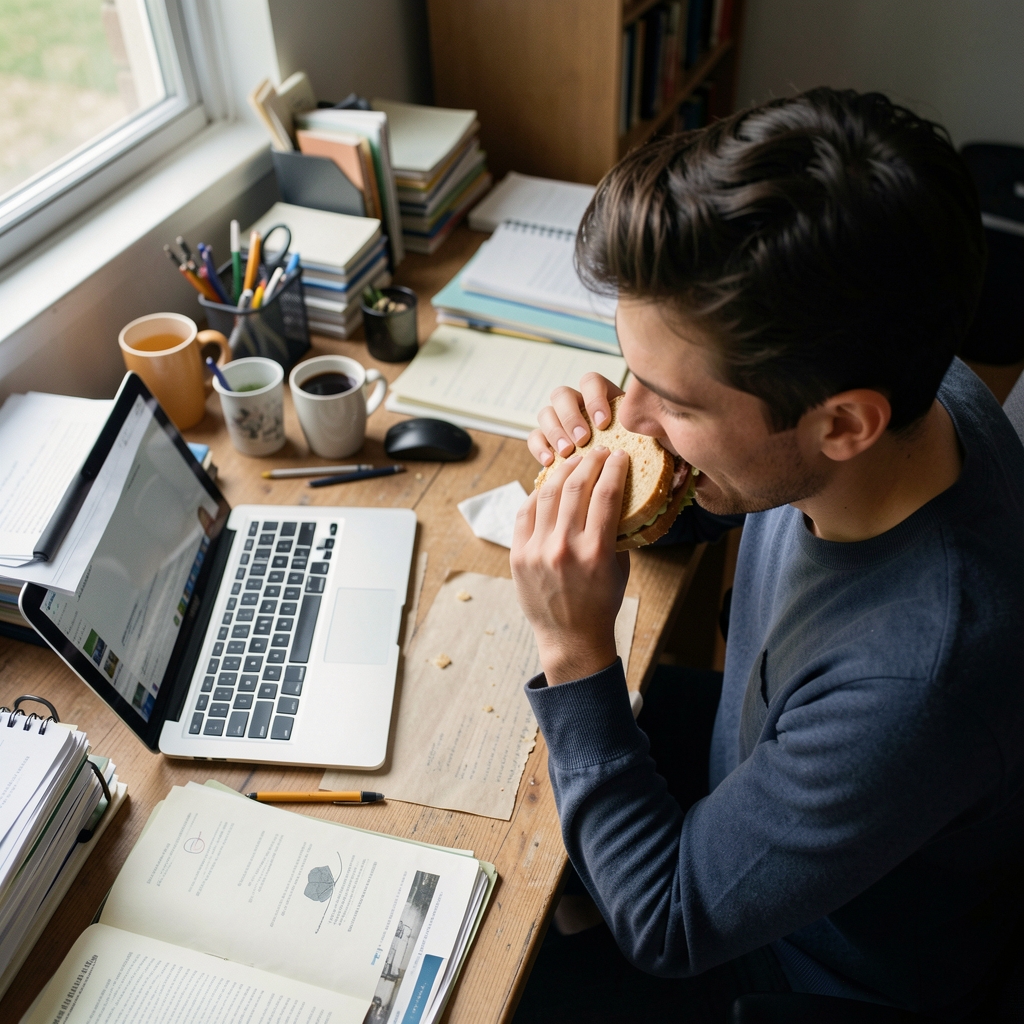
Overhead view of a busy office desk with a half-eaten meal, a notebook, and scattered paperwork under warm morning light
Est. January 2026
Eating Pace & Modern Meals

A Chronicle of the Meal.

London, 2026 — Field notes on eating pace, hurried meals, and the convenience food patterns shaping everyday life in modern Britain.

Read the Dispatch
02 — Featured Dispatches

Current Field Notes

03 — Observed Patterns
7 min
Average desk lunch duration observed in the 2026 field notes
3.4×
Faster pace of eating when a screen is present during the meal
62%
Of weekday lunch choices in urban Britain involve ready-made or convenience food
20 min
Typical lag before satiety signals register following a meal
04 — About This Publication

The Pace of Modern Eating, Documented.

About Staleron Dispatch

London, 2026 — Staleron Dispatch is an independent editorial publication dedicated to the observation of everyday eating habits: the pace at which meals are consumed, the role of convenience food in the working week, and the relationship between distracted eating and portion awareness.

Each issue draws on field notes, published nutritional research, and direct observation to document what actually happens at mealtimes in contemporary Britain. The publication does not recommend routines or promise particular outcomes — it records what is observed and presents that record in a form useful to curious readers.

Articles are reviewed under the editorial standards described in the Editorial Standards section before publication. Writers disclose relevant relationships. Corrections are noted publicly.

05 — Key Themes Covered
Theme 01

Rushed Eating Habits

The pace of modern eating — from the five-minute desk lunch to the commute snack — and its relationship to post-meal appetite and everyday food rhythm.

Theme 02

Convenience Food Choices

Ready-made meals, takeaway containers, and the food decisions made under time pressure — how the convenience food landscape shapes portion awareness and eating rhythm.

Theme 03

Distracted Eating Patterns

Screens and mealtimes, eating without attention, and the role of the meal environment in shaping the overall pace and duration of daily food consumption.

Theme 04

Portion Awareness

Overeating patterns observed when eating quickly versus slowly, and what changes when people become more conscious of portion size in their everyday food choices.

Theme 05

Mindful Eating Pace

The growing body of published research on slow eating practice, mindful eating pace, and what attention at mealtimes contributes to the overall food experience.

Theme 06

Meal Environment

How the physical setting of a meal — the desk, the sofa, the kitchen table — influences eating duration, food awareness, and the overall rhythm of daily mealtimes.

06 — Reader Questions

Questions on Eating Pace and Everyday Habits

Eating pace refers to the speed at which a meal is consumed — including the number of bites per minute, the total duration of a sitting, and the degree of attention brought to the act of eating. Published research suggests that the pace of a meal influences how satiety signals are experienced in the period following it, though individual responses vary considerably.

Convenience food choices often involve pre-portioned formats that bypass the usual awareness signals associated with preparing a meal from raw ingredients. When eating pace is also faster — as is common during time-pressured lunches — portion awareness can be further reduced. Staleron Dispatch explores this relationship through field observation and published nutritional research.

Distracted eating describes the pattern of consuming a meal while attention is directed elsewhere — most commonly toward a screen. Published dietary research notes that screen-based eating is associated with a faster eating rhythm and reduced awareness of the meal itself. Articles in this publication examine those patterns directly from observed field notes.

Published research on slow eating practice suggests that a more measured eating pace is associated with greater meal satisfaction, though the degree of this association differs across individuals. The content on Staleron Dispatch is editorial in nature and reflects the writers' observations — not a guideline or a promise of particular results.

Each dispatch draws on direct observation by the named writer, with supporting references from published nutritional research where available. Sources are cited within the body of each article. The editorial standards governing how articles are selected, reviewed, and corrected are described in full on the Editorial Standards page.

07 — Start Reading

Three Dispatches on the Modern Meal.

Field notes from the desk, the takeaway counter, and the sofa. Each dispatch is a documented observation — not a guide, not a programme.