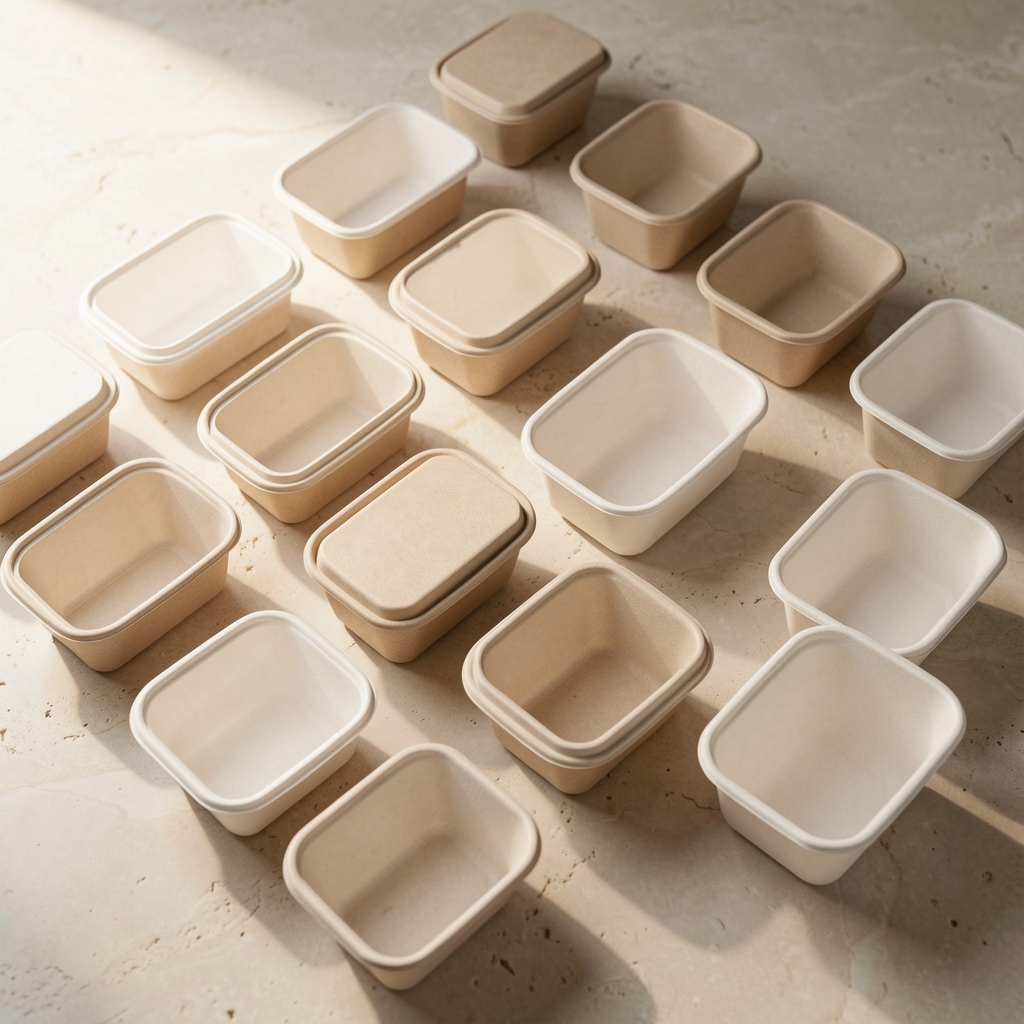
London, February 2026. The takeaway container is, among other things, a decision made in advance on behalf of a person who has not yet decided how hungry they are. It arrives pre-portioned, sealed, priced, and named. By the time it reaches the desk, the eater's role has been substantially reduced: open, consume, dispose. What remains outside the container's jurisdiction is only the pace.
The Format of Convenience
There is a particular quality to convenience food choices under time pressure that sets them apart from other eating decisions. When time is short — the forty-minute lunch window, the ten-minute gap between two standing calls — the choice is not primarily about appetite. It is about proximity, speed of acquisition, and the number of decisions required. The takeaway container scores well on all three. It is two minutes away, assembled in sixty seconds, and requires precisely one decision: which one to pick.
The container also removes what might be called the portion negotiation — the moment in a home-prepared meal when the person serving decides how much to put on the plate. That negotiation, however brief or unconscious, incorporates some degree of hunger-awareness. Pre-portioned convenience food skips this step entirely. The portion is determined by the format, not by the appetite of the eater at the time of eating.
Published dietary research on eating pace and portion consumption notes that people eating from pre-portioned containers are significantly less likely to stop before the container is empty, regardless of satiety patterns mid-meal. The container's boundary functions as a de facto stopping point — which works well when the container corresponds to a reasonable portion, and less well when it does not.
A Week of Convenience: Field Observations
Over the course of a working week in early February, I kept a record of every meal acquired from a convenience source — a shop, a takeaway counter, or a vending point — within a one-mile radius of the Dispatch office in EC1. The record noted the meal type, the time taken to acquire it, the time taken to eat it, and any observations about attention during the meal. I did not weigh portions or count anything. The record was qualitative and observational.
Monday: a warm wrap purchased from a counter, eaten at the desk in nine minutes. The wrap was adequate in size and temperature. I finished it because it was finished, not because I had reached a particular awareness of fullness. An hour later, I ate a second item — a packet of nuts from the shelf — without any conscious connection to the earlier meal.
Tuesday: soup from a chain outlet, consumed at a counter seat rather than the desk. Duration: sixteen minutes. The difference in the eating experience was immediately apparent. The soup required a spoon, a different posture, and some minimal degree of attention to avoid spillage. These minor physical constraints slowed the pace and, as a secondary effect, increased attentiveness. I noticed the soup cooling, noticed when the bowl was half-empty, noticed when it was three-quarters empty. The meal had a shape; Monday's wrap had been shapeless.
Wednesday: The Salad Box Problem
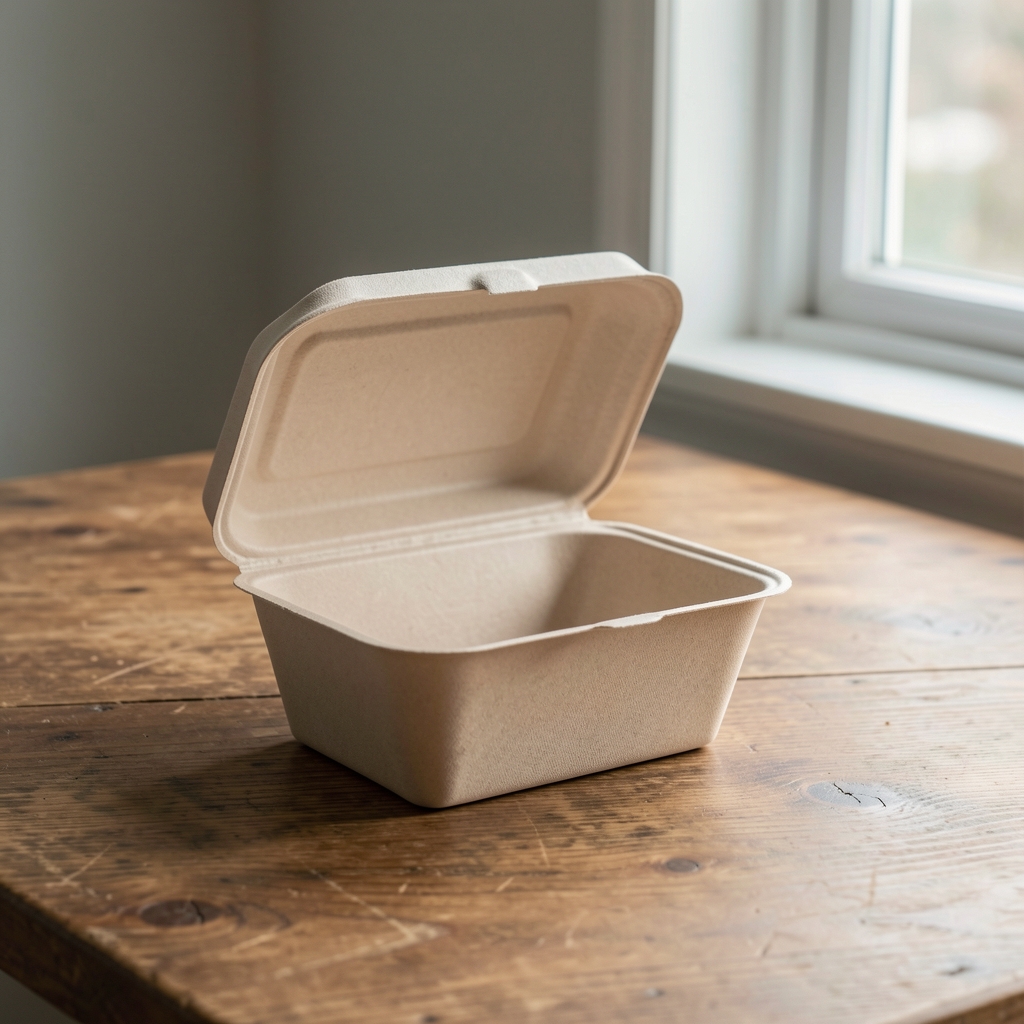
Wednesday produced the most instructive observation of the week. A large salad box — the kind assembled behind a glass counter and sealed with a transparent lid — was consumed in full at the desk in twelve minutes. The contents were considerable in volume: a generous portion by any measure, combined from four ingredient trays at a cost reflective of that volume. Yet within ninety minutes of eating, I was hungry again — or at least registering something that functioned like hunger.
The rapid eating pace had, in all probability, contributed to this. There is a well-documented lag between eating and the arrival of post-meal appetite signals — the body's communication that enough has been consumed takes time to reach awareness. Eating a large meal in twelve minutes means the meal ends before that communication arrives. The eater has finished and cleared the desk before any internal feedback has registered.
This pattern — a large convenience portion consumed quickly, followed by a return of appetite before the expected interval — recurred across multiple observations during the week. It was not the quantity of the food that produced the pattern; it was the relationship between quantity and pace.
Thursday: The Counter Seat Return
On Thursday I returned to the counter seat arrangement from Tuesday — not from any formal intention, but because the seating was available. A noodle dish from a small counter near the office, eaten with chopsticks over eighteen minutes. Chopsticks are, incidentally, a natural pace regulator for someone who handles them with moderate rather than expert fluency. The meal produced a clear mid-meal awareness of satisfaction, and I stopped with a small amount remaining in the bowl — something that had not occurred on Monday, Wednesday, or Friday.
The meal environment — a counter with other people eating, some minimal ambient noise, no keyboard — shaped the eating pace in ways that no deliberate effort had been required to produce. The environment did the work that attentiveness was expected to do but rarely managed.
- — Pre-portioned containers remove portion negotiation from the eating act entirely.
- — Meals eaten at a dedicated counter seat averaged 5–7 minutes longer than desk meals.
- — Post-meal appetite patterns were more distinct following slower, seated meals.
- — Food format (soup vs. solid; chopsticks vs. fingers) functioned as a pace variable independent of deliberate intention.
- — Satiety awareness was observed mid-meal only on days with slower eating pace and counter seating.
Friday: The Accumulated Pattern
By Friday, a pattern had established itself across the week's record. The meals that produced the clearest post-meal awareness of appetite — the sense of having eaten an appropriate amount, the absence of further eating within the following hour — were meals eaten seated at a non-desk surface, using implements that required some attention, without a screen open. These meals were also consistently longer in duration: between fifteen and twenty minutes, compared with an average of nine to eleven minutes for desk meals.
The convenience food itself was present in both categories. Tuesday's soup and Thursday's noodles were both acquired from takeaway counters in the same way as Monday's wrap. The food source was identical; the eating environment was not. This distinction is significant in the context of how convenience food is typically discussed — as a category of food choices rather than as a category of eating contexts.
Convenience food and a fast eating rhythm are not the same thing. Convenience food enables fast eating by removing preparation time and portioning decisions. But the eating pace itself is determined by where and how the food is consumed, not by the food category. A ready-made soup eaten at a counter with a spoon can be consumed more attentively than a home-prepared sandwich eaten at a keyboard. The distinction matters.
The Calculus of Convenience
The phrase "convenience food choices" encompasses an enormous range of eating decisions, most of which share only the property of being acquired rather than prepared. They are not uniform in their effect on eating pace, portion awareness, or the quality of the eating experience. What they share is the removal of preparation time — and with it, the incidental signals that preparation provides about the meal that is coming.
There is a body of evidence suggesting that awareness of a meal before it begins — sight, smell, anticipation — contributes to the eating experience in ways that affect both pace and the awareness of appetite during and after the meal. Convenience food, acquired and consumed within a short timeframe, compresses or removes this pre-meal period. The meal begins with opening the container.
Whether this matters depends on what the eater is trying to do. If the aim is to consume calories efficiently in the available time, the convenience container is well-designed for that purpose. If the aim includes any element of meal satisfaction — the experience of eating as an occasion rather than a function — then the container format creates conditions that work against it, regardless of what is inside the container.
The calculus is not a moral one. It is a practical description of what different eating contexts produce. The desk lunch, the counter soup, the walking sandwich — each produces a different eating experience for reasons that have more to do with environment and pace than with the quality of the food. Recording that distinction is what this dispatch set out to do.

A Note on Method
The observations above are those of a single writer over five consecutive weekdays. They are field notes in the tradition of this publication — qualitative, located, and limited to what was directly observed. They do not constitute a study, a controlled comparison, or a recommendation for any particular eating approach.
Where the observations touch on broader patterns in eating pace research, those references reflect published nutritional literature. Readers with specific questions about their own eating habits and overall wellbeing are encouraged to speak with a qualified nutrition or wellness professional.